

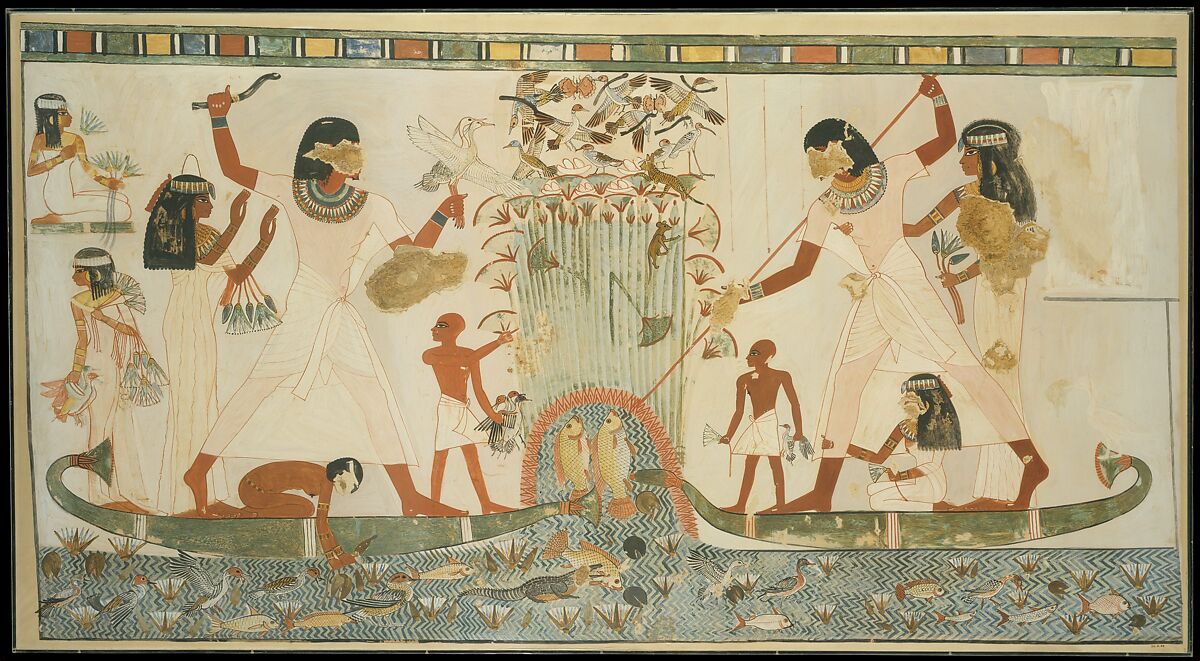
Long before tilapia appeared in supermarkets, it was nourishing communities and inspiring artists. Ancient Egyptians associated it with rebirth. Christian tradition connected it with Saint Peter. Centuries later, a royal gift from Japan to Thailand helped expand fish farming. Today, tilapia supports livelihoods and brings familiar flavors to tables around the world.
Ancient roots and everyday nourishment
Tilapia is a common name for a group of related freshwater fishes. Nile tilapia, Oreochromis niloticus, is especially important in aquaculture. Its relationship with people reaches back thousands of years, particularly in Egypt, where it was both a familiar food fish and a meaningful artistic symbol.1, 16
For ancient Egyptians, fish were an important part of the diet. Tilapia was appreciated for its taste, but its significance extended beyond the kitchen. Its image appeared in objects used in daily life and in representations of the world beyond death.1–3
A symbol of fertility and rebirth
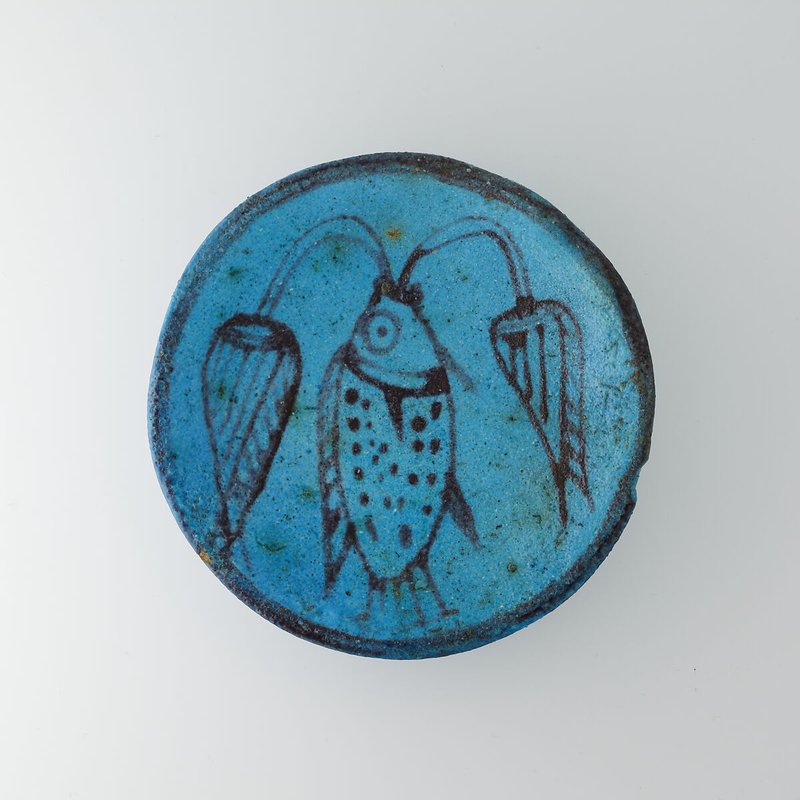
Much of tilapia's symbolism came from its reproductive behavior. Nile tilapia mothers protect developing eggs and young inside their mouths, a behavior called mouthbrooding. To ancient observers, young fish emerging from a parent's mouth could appear to be newly created life. Museum interpretations connect this behavior with beliefs about fertility, regeneration, and rebirth.1, 3
Tilapia also appeared alongside lotus flowers. The lotus, opening and closing with sunlight, carried its own associations with renewal. Together, fish and flower expressed the power of life to begin again. A bowl in the Metropolitan Museum of Art preserves this pairing.3
A carnelian-and-gold tilapia pendant at the Walters Art Museum, dated approximately 1390–1295 BCE, offers another connection to the past. A fish valued as food could also become a precious object worn as jewelry and associated with rebirth.1
Christian tradition and Saint Peter's fish
Around the Sea of Galilee, tilapia is commonly called "St. Peter's fish." Fishing was an important livelihood in the world of Jesus and his disciples. Peter and Andrew belonged to that working world, and the lake supplied food to surrounding communities.4
The traditional name is associated with Matthew 17:24–27. Jesus instructs Peter to catch a fish and find a coin in its mouth to pay the temple tax. However, the biblical text does not identify the species. The connection with tilapia belongs to tradition rather than a confirmed identification in Scripture.4, 5

Masaccio's Renaissance fresco combines three moments: Jesus responding to the tax collector, Peter retrieving the coin from the fish at the left, and Peter paying the tax at the right. The artwork preserves the Gospel story without establishing the fish's species.6
The same distinction applies to the feeding of the five thousand: Matthew describes five loaves and two fish but does not name the fish. Tilapia can be connected with the fishing landscape and traditions of Galilee without claiming that every fish in the Gospel accounts was tilapia.17
Japan and Thailand and a royal gift
One of tilapia's most memorable modern stories began with 50 fish. In 1965, Akihito, then Japan's Crown Prince and later Emperor, sent 50 Nile tilapia to Thailand's King Bhumibol Adulyadej. Their shared interest in fish helped create a lasting connection between the two countries.7, 8, 18

The fish were raised at Chitralada Palace and reproduced rapidly. The king expanded the ponds, and thousands of fingerlings were later donated to Thailand's Department of Fisheries for distribution. The project helped make Nile tilapia widely available to farmers across Thailand.7, 8

Known in Thailand as pla nil, Nile tilapia became familiar in household cooking, including fried and grilled preparations. Its story links friendship between nations with food security and rural livelihoods. These archival images illustrate the royal project; the fish were sent from Japan rather than presented in a documented in-person handover.7, 18
Food traditions and community celebrations
Tilapia's cultural importance lives in the way people prepare and share it. In Ghana, grilled tilapia with banku and hot pepper is a well-known combination. Banku, made from fermented corn and cassava dough, accompanies the seasoned fish. A USDA report describes grilled tilapia with banku as a favorite widely featured on Ghanaian menus.9, 19
In the Philippines, tilapia harvests can become occasions for community gatherings. Manila Bulletin reporting describes a festival in a Benguet village where residents celebrated and shared grilled tilapia prepared for everyone. Such celebrations connect fish farming with hospitality and pride in the harvest.10
Egypt offers another connection between past and present. In a 2023 market report, FAO described tilapia as the country's most commonly consumed fish, with most Egyptian production serving domestic consumers. Thousands of years after appearing in Egyptian art, it remains part of everyday food culture.20
A place on national currency
Tilapia has even appeared on money. Uganda's 2,000-shilling banknote features a tilapia on its reverse, alongside the Independence Monument. Known locally as ngege, the fish has a place among images representing the country's heritage.11, 21

From regional fisheries to global aquaculture
Tilapia's worldwide expansion accelerated during the twentieth century. FAO describes widespread distribution of Mozambique tilapia during the 1940s and 1950s, followed by the expansion of Nile tilapia during the 1960s through the 1980s. Aquaculture helped carry these fish into new food systems and markets.16
In 1988, WorldFish and partners from the Philippines and Norway launched the Genetically Improved Farmed Tilapia, or GIFT, project. Through selective breeding, researchers developed faster-growing Nile tilapia suited to small farms and commercial production. Choosing parents over successive generations helped improve productivity and farmers' earning opportunities.23
The industry now operates on a substantial scale. EUMOFA, drawing on FAO data, reported approximately 6.8 million metric tons of farmed tilapia worldwide in 2023. Behind that production are hatcheries, farms, processors, transporters, retailers, and households that depend on fish for food and income.12, 23
Tilapia in the United States
In the United States, tilapia is familiar through supermarket fillets, restaurant menus, and specialty seafood markets. Imports supply much of the market, while American farms also serve customers through locally raised live fish.24
Ethnic grocery stores and seafood markets help connect tilapia with customers' culinary traditions. Live and whole fish are especially important in markets serving Asian communities. Florida's Department of Agriculture notes that much of U.S. tilapia production is sold live to Asian buyers.13
Mississippi State University Extension describes domestically produced tilapia being transported live to ethnic markets along the East and West coasts and in the upper Midwest. These channels connect local producers with diverse communities and traditional food preferences.14
Spring Tilapia and the story today
Spring Tilapia is part of this American chapter. With its breeding nucleus and grow-out facilities in Florida, the company brings U.S. farm-raised tilapia to today's consumers. Its participation in Fresh From Florida connects a fish with ancient roots to local agriculture and a new generation of shared meals.15
From Egyptian murals to Florida farms, tilapia's story continues through the people who raise it, cook it, and bring it to the table.
Sources and image credits
- 1.Walters Art Museum. Tilapia Fish pendant, ca. 1390–1295 BCE ↗.
- 2.The Metropolitan Museum of Art. Menna and Family Hunting in the Marshes ↗. Text and image.
- 3.The Metropolitan Museum of Art. Bowl with fish and lotuses ↗. Text and image.
- 4.Loyola Press. Biblical Fishing 101 ↗. Saint Peter's fish and Galilee.
- 5.USCCB. Matthew 17:24–27 ↗. The fish and the temple tax.
- 6.Web Gallery of Art. Masaccio, The Tribute Money ↗. Text and image.
- 7.Royal Thai Embassy, Cairo. The Gift that Keeps on Giving ↗.
- 8.KMUTT Library. King Rama IX, Chapter 9 ↗. Royal fish-rearing history and archival images.
- 9.USDA Foreign Agricultural Service. Ghana Fish and Seafood Report, March 8, 2019 ↗.
- 10.Manila Bulletin. Benguet village showcases bountiful tilapia harvest in festival ↗.
- 11.Leftover Currency. Uganda 2,000-shilling banknote, Speke Monument ↗.
- 12.EUMOFA. Monthly Highlights, May 2025 ↗. Tilapia production using FAO data.
- 13.Florida Department of Agriculture and Consumer Services. Tilapia ↗.
- 14.Mississippi State University Extension. Tilapia ↗. U.S. live-fish distribution.
- 15.Spring Tilapia. Company website; company details supplied by Spring Tilapia.
- 16.FAO. Cultured Aquatic Species Information Programme ↗. Nile tilapia history.
- 17.USCCB. Matthew 14:13–21 ↗. Feeding the five thousand.
- 18.KMUTT Library. King Rama IX, Chapter 7 ↗. Akihito sent the fish after returning to Japan.
- 19.Banku ↗. Background on fermented corn and cassava dough.
- 20.FAO GLOBEFISH. Production faces challenges, positive trade outlook ↗, November 21, 2023.
- 21.Daily Monitor. Your money is more than legal tender ↗. Uganda banknote imagery.
- 22.Banknotes.com. Uganda 2,000 shillings, 2010 ↗. Banknote photograph.
- 23.WorldFish. Genetically Improved Farmed Tilapia project ↗.
- 24.Agricultural Marketing Resource Center. Tilapia ↗. Imports and U.S. live-fish markets.
Images retain source attribution. Archival royal photographs illustrate the historical project rather than an in-person gift handover. Company details were supplied by Spring Tilapia.